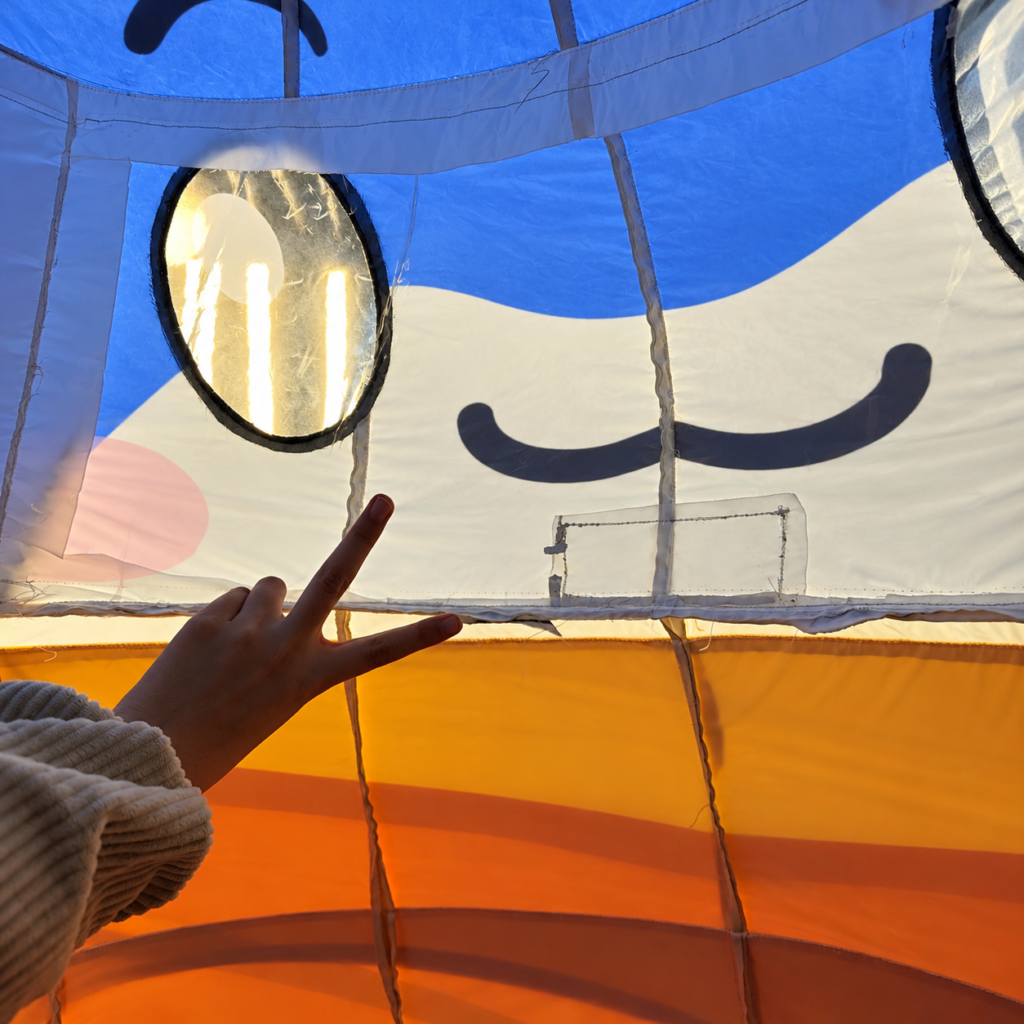
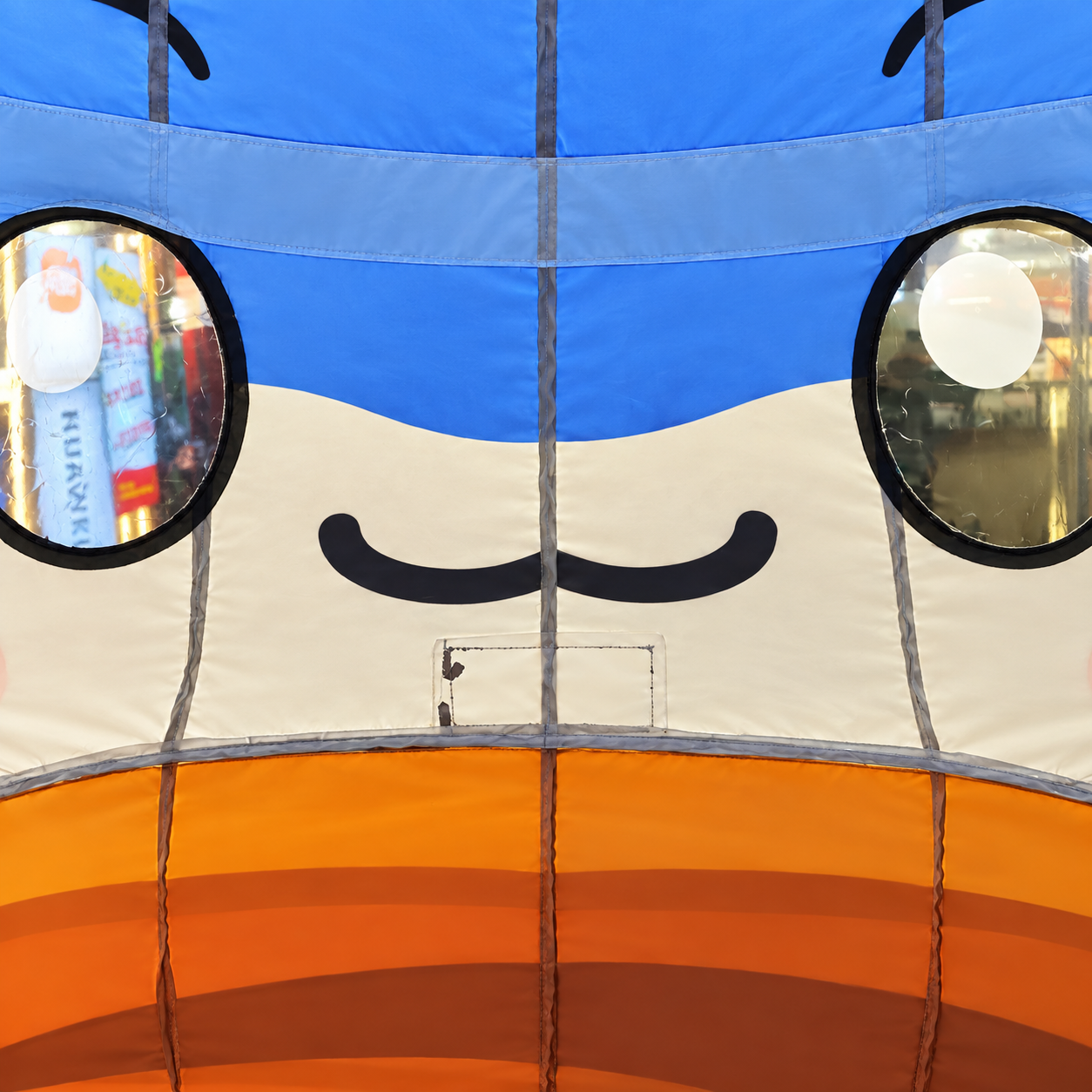
A mascot costume needs to look impressive from the outside, but what happens inside the costume is just as important.
Two of the most important factors in mascot costume design are visibility and ventilation.
These features directly affect performer safety, comfort, movement, and how long the mascot can be used during an event.
A costume that looks great but is difficult to see through or becomes too hot inside can quickly become uncomfortable and impractical.
1. Visibility Is More Than Just an Eye Opening
In many mascot costumes, the performer does not look directly through the character’s eyes.
Depending on the design, visibility may come from:
- The eyes
- The mouth
- The nose
- The neck area
- Hidden mesh sections
These openings are often covered with mesh or dark fabric so that the performer can see outside while maintaining the character’s appearance.
The challenge is to create enough visibility without making the viewing area obvious.
2. Why Good Visibility Matters
Limited visibility can create safety problems during real-world use.
Mascots often perform in environments such as:
- Schools
- Sports stadiums
- Shopping malls
- Trade shows
- Outdoor events
- Parades
- Brand promotions
These locations may include crowds, stairs, cables, equipment, children, or uneven surfaces.
If the performer cannot see clearly, even simple movements can become difficult.
Good visibility helps the performer move confidently and interact more naturally with people.
3. Field of Vision
Field of vision refers to how much of the surrounding area the performer can see.
A narrow viewing area may only allow the performer to see directly forward.
A wider viewing area makes it easier to notice people approaching from the side and avoid obstacles.
For active mascots, especially those used for sports events or dancing, a wider field of vision is particularly useful.
The design of the mascot head should consider both forward visibility and peripheral awareness.
4. Visibility and Character Design
Some mascot designs are naturally easier to work with than others.
Characters with large eyes or large mouths usually provide more options for hidden viewing areas.
Characters with very small facial features may require more creative solutions.
Designers may adjust the location of the mesh, enlarge certain features slightly, or create hidden ventilation and viewing areas that are difficult to notice from the outside.
The goal is to preserve the original character while still making the costume practical.
5. Why Mascot Costumes Become Hot
Mascot costumes cover most of the performer’s body.
Foam, fabric, padding, and internal support materials can trap body heat.
During movement, the performer also generates more heat.
This means the temperature inside the costume can increase quickly, especially during:
- Summer events
- Outdoor performances
- Long promotional activities
- Sports games
- Dancing
- Parades
Without proper ventilation, the performer may become tired much faster.
6. Common Ventilation Methods
Different mascot structures use different ventilation methods.
Common solutions include:
- Mesh ventilation areas
- Open neck sections
- Breathable fabrics
- Internal air channels
- Small cooling fans
- Lightweight foam construction
Some mascot heads include small electric fans that help circulate air.
Others rely on carefully positioned mesh panels that allow heat to escape naturally.
7. Built-In Cooling Fans
Cooling fans are especially useful for large mascot heads.
They help move warm air out and bring fresh air into the internal space.
However, fans need to be positioned carefully.
If placed incorrectly, they may create noise, reduce internal space, or interfere with the structure.
Battery position and accessibility also need to be considered.
Cooling systems should remain lightweight and easy to maintain.
8. Ventilation in the Body Section
Ventilation is not only important in the head.
The mascot body can also become hot.
Areas such as the back, neck, armpits, and sides can be designed with breathable lining or hidden ventilation zones.
Lightweight fabrics and thinner internal padding can also reduce heat buildup.
For active performances, this can make a noticeable difference.
9. Balancing Appearance and Comfort
One of the biggest challenges in mascot design is balancing appearance with functionality.
Large ventilation holes may improve airflow but can damage the visual effect.
Large mesh panels may improve visibility but may also make the performer visible from outside.
This is why ventilation and visibility need to be planned as part of the overall design rather than added later.
The best solutions are usually integrated into the character itself.
10. Different Events Require Different Designs
The amount of ventilation and visibility required depends on how the mascot will be used.
A mascot used mainly for short photo sessions may not need the same level of ventilation as one used for long outdoor events.
A sports mascot may need:
- Wider visibility
- Better airflow
- Lighter structure
- Greater freedom of movement
A trade show mascot may focus more on appearance and standing comfort.
Understanding the real use of the costume helps determine the right design.
Conclusion
Visibility and ventilation are essential parts of mascot costume design.
They influence:
- Safety
- Comfort
- Movement
- Performance time
- Interaction
- Overall usability
A well-designed mascot should not only look good from the outside.
It should also provide a safe, comfortable, and practical experience for the performer inside.
For long-term use, good visibility and ventilation are not optional details. They are part of the foundation of a functional mascot costume.