When choosing a custom mascot costume, appearance is important, but the materials used inside the costume are just as important.
Different materials affect the mascot’s weight, comfort, durability, flexibility, ventilation, and final appearance.
A professional mascot costume is usually made from several different materials rather than just one. The exact combination depends on the character design, shape, size, and intended use.
Here are some of the most common materials used in custom mascot costumes.
1. High-Density Foam
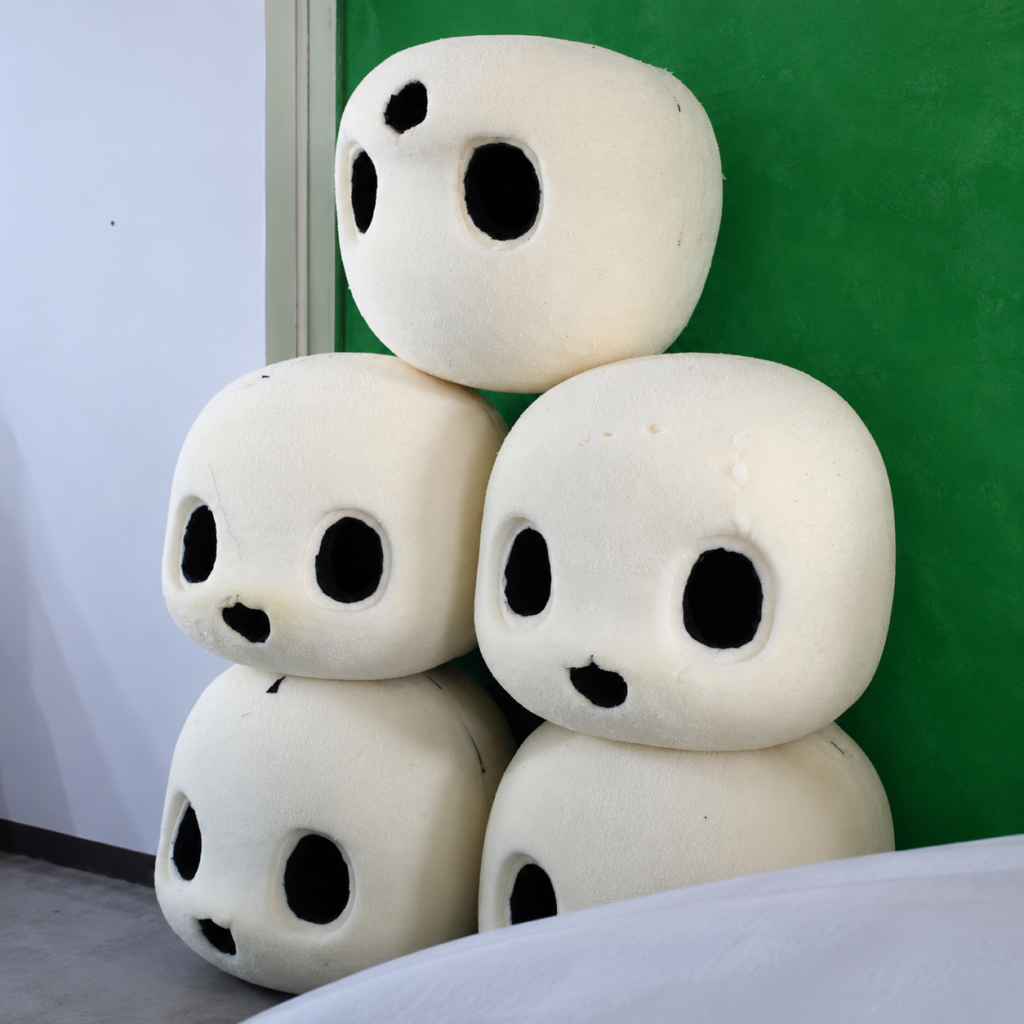
High-density foam is one of the most commonly used materials in mascot costume production.
It is especially suitable for:
- Large mascot bodies
- Round characters
- Square characters
- Food-shaped mascots
- Product-shaped mascots
- Oversized cartoon characters
High-density foam is lightweight, soft, and flexible. This makes it easier for performers to move naturally while wearing the costume.
Because it can be cut, shaped, and layered easily, foam is also useful for creating large volumes without making the costume too heavy.
For many mascot designs, foam provides a good balance between appearance and comfort.
2. EVA Foam
EVA is another widely used material in custom mascot costume construction.
Compared with softer foam, EVA is firmer and better at maintaining a defined shape.
It is commonly used for:
- Mascot heads
- Animal heads
- Character facial structures
- Ears
- Horns
- Structured accessories
- Designs requiring clear three-dimensional contours
EVA can create sharper and more stable shapes, which is especially useful for mascot heads that need to closely match a character design.
Because it is lightweight and durable, EVA is often combined with other materials in professional mascot production.
3. Carved Foam
Some mascot costumes require more detailed sculpting.
For high-end or highly realistic projects, carved foam may be used to create precise shapes.
This method is suitable for:
- Complex character heads
- Detailed facial structures
- Unique product mascots
- High-restoration character designs
- Premium promotional mascots
The foam is shaped by hand or machine to create the required contour.
This process usually takes more time, but it can provide a more accurate and refined final appearance.
4. Fabrics
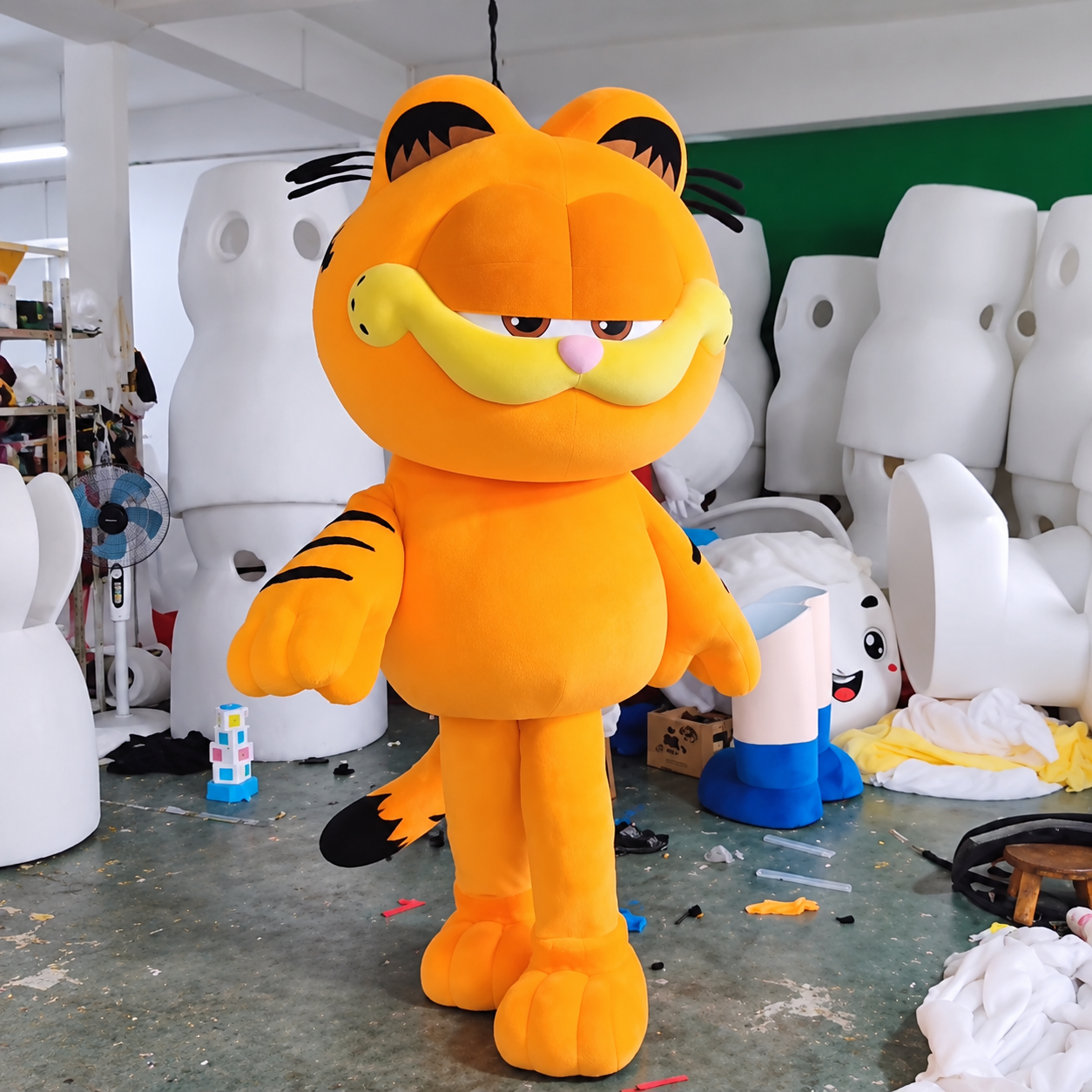
The outside of the mascot is usually covered with fabric.
Different fabrics are selected depending on the character.
Common fabric types include:
- Short plush
- Long plush
- Fleece
- Velboa
- Lycra
- Polyester fabric
- Stretch fabric
- Felt
- Artificial fur
For example, animal mascots may use plush or artificial fur, while product mascots or smooth cartoon characters may use stretch fabrics or polyester.
The choice of fabric affects not only appearance, but also how the costume feels when touched and how easy it is to maintain.
5. Mesh Fabric
Mesh is often used in areas where the performer needs to see through the costume.
It may be placed in:
- Eyes
- Mouth areas
- Dark-colored facial details
- Hidden vision openings
From the outside, the mesh can blend into the mascot’s design. From the inside, it allows the performer to see the surrounding environment.
A well-designed mascot costume should balance appearance with safe visibility.
6. Internal Support Materials
Some mascot costumes require an internal support system to help maintain shape.
Depending on the design, this may include:
- Plastic support frames
- Lightweight tubing
- EVA supports
- Foam reinforcement
- Internal straps
- Adjustable harnesses
These structures help distribute the weight of the costume and improve wearing stability.
They are especially useful for mascots with large heads or unusual body proportions.
7. Lining Materials
The inside of a mascot costume may also include lining materials.
Interior lining helps improve comfort and protects the structural materials inside the costume.
Good lining can make the costume feel cleaner and more comfortable during repeated use.
For costumes used in schools, sporting events, promotional activities, or amusement venues, this can be especially important.
8. Ventilation Components
Mascot costumes can become warm during use, so ventilation is an important part of the design.
Depending on the costume, ventilation may be improved through:
- Mesh openings
- Hidden air holes
- Internal fans
- Breathable fabric
- Open-space internal structures
Some costumes can also be equipped with small fans inside the head to improve airflow.
This is especially useful for performers who need to wear the costume for longer periods.
9. Shoes, Gloves, and Accessories
Mascot shoes and gloves may use combinations of:
- Foam
- EVA
- Fabric
- Rubber
- Anti-slip materials
- Lightweight plastics
Accessories such as hats, glasses, props, wings, tails, or decorative parts may also use different materials depending on their structure.
The goal is to keep them visually accurate while avoiding unnecessary weight.
Which Material Is Best for a Mascot Costume?
There is no single material that is best for every mascot.
The right material depends on:
- Character shape
- Costume size
- Usage environment
- Wearing time
- Required durability
- Desired appearance
- Budget
- Movement requirements
For example, a soft and oversized promotional mascot may benefit from high-density foam, while a character with a detailed head shape may need EVA or carved foam.
In many cases, several materials are combined in one costume to achieve the best result.
Why Material Selection Matters
Good material selection can improve:
- Wearing comfort
- Movement flexibility
- Costume durability
- Shape stability
- Visual accuracy
- Ventilation
- Safety
- Overall user experience
A mascot costume that looks good but is too heavy or uncomfortable will be difficult to use in real events.
That is why material selection should always consider both appearance and actual performance.
Final Thoughts
Custom mascot costumes are made from a combination of structural materials, fabrics, support components, and accessories.
Common materials such as high-density foam, EVA, carved foam, plush, stretch fabric, mesh, and internal supports all play different roles in the final costume.
Choosing the right materials helps create a mascot that is lightweight, durable, comfortable, and visually accurate.
If you already have a mascot design, logo, sketch, or reference image, you can send it to us for evaluation.
We can recommend suitable materials and production methods based on the character shape, usage scenario, and customization requirements.