
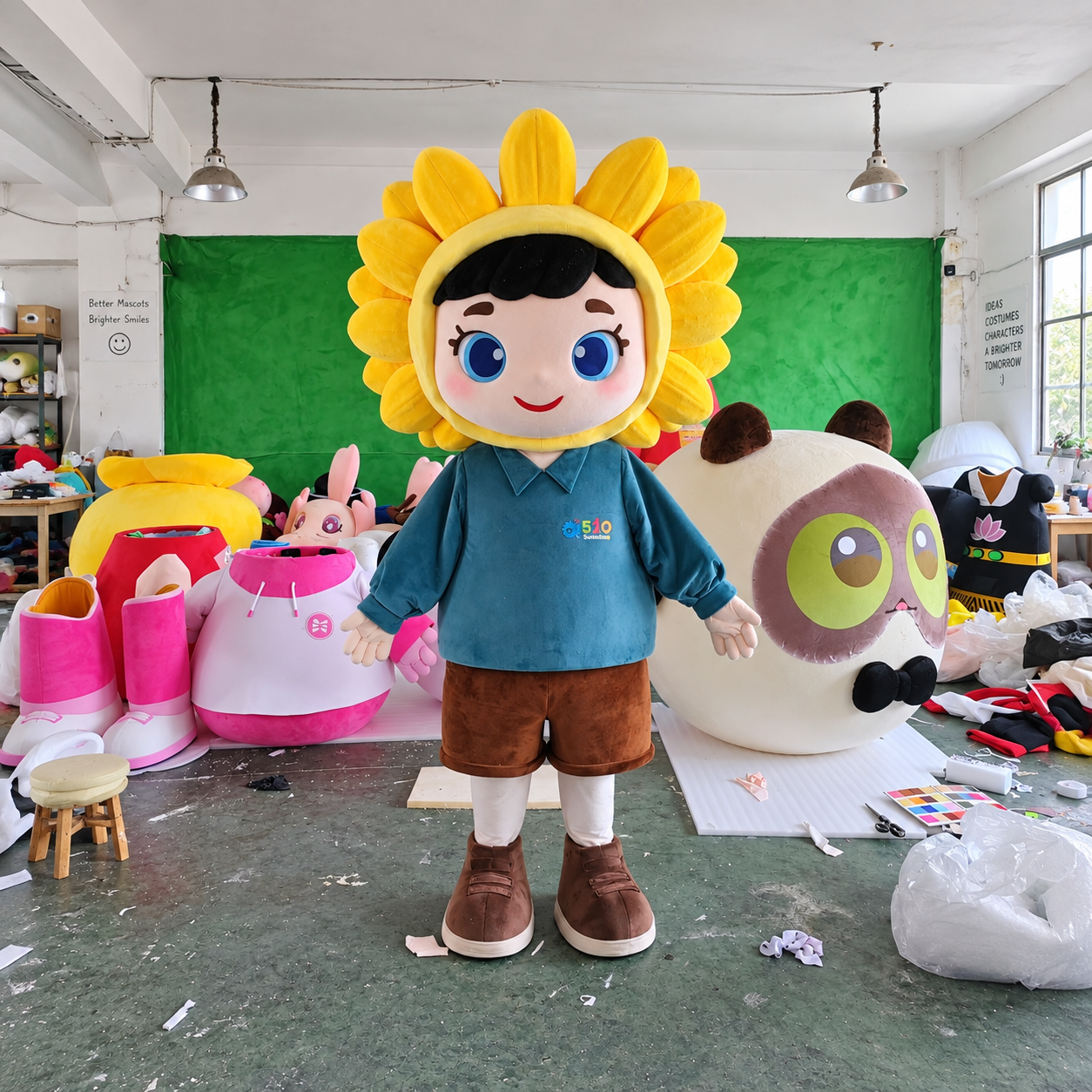
A mascot costume is not simply an oversized piece of clothing. It is a wearable structure that needs to move together with the performer inside it.
Even when the outside shape looks correct, poor internal sizing can make a mascot difficult to control, uncomfortable to wear, and potentially unsafe during active use.
This is why performer fit is an important part of mascot costume design.
A good fit does not necessarily mean the costume should be tight. Instead, the internal space, support points, vision height, arm position, and footwear all need to work with the performer’s body.
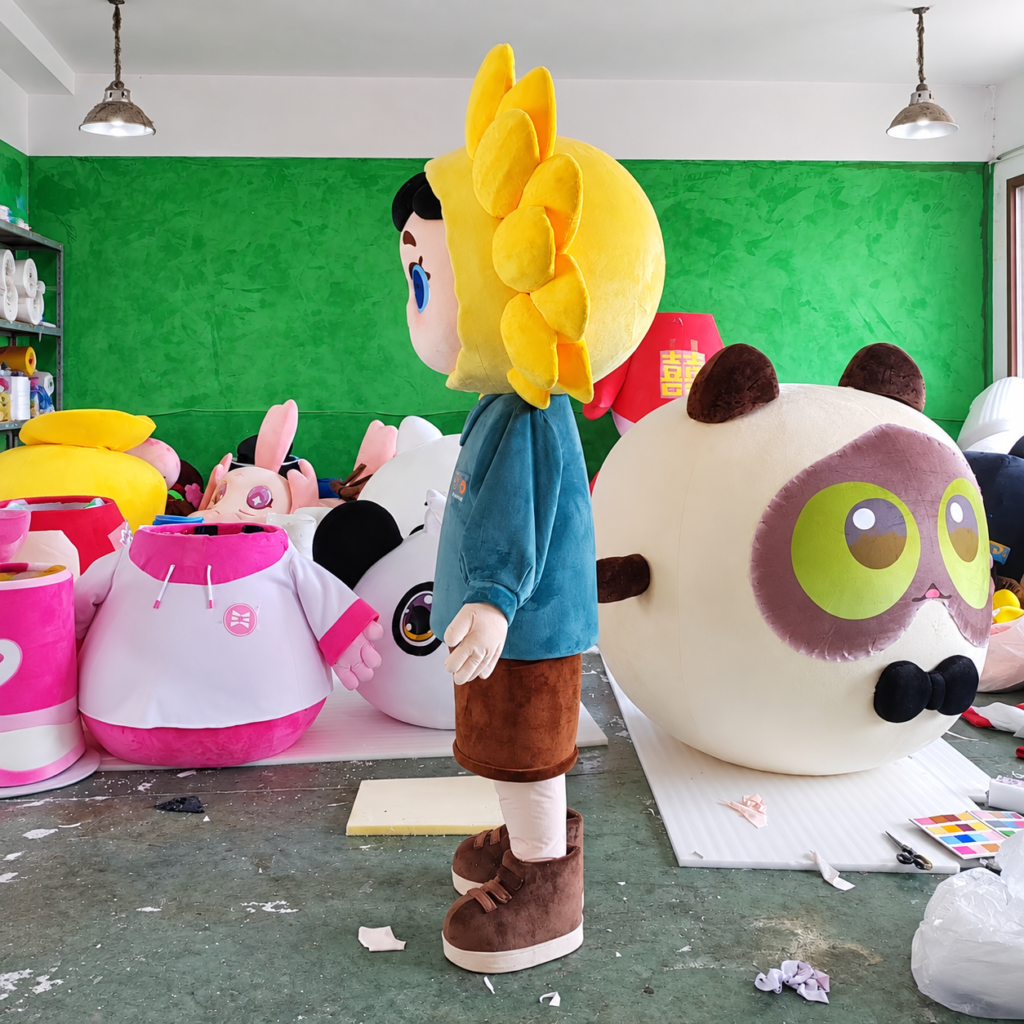
1. Why Performer Height Matters
Performer height affects almost every part of a mascot costume.
The position of the head, shoulders, arms, waist, knees, and feet all depend on the person wearing the costume.
If the costume is designed for a much taller performer, a shorter person may struggle to reach the correct hand or arm positions.
If the costume is too short, the performer may need to bend slightly while wearing it.
Both situations can reduce comfort and control.
For this reason, performer height is usually one of the first measurements considered when developing a custom mascot costume.
2. Eye Level and Vision Position
One of the most important measurements is the performer’s eye level.
The visible eyes of the mascot character do not always match the performer’s actual eyes.
In many designs, the performer may see through:
- The mascot’s mouth
- Hidden mesh below the eyes
- The neck area
- Special transparent sections
- Other concealed viewing zones
If the internal head position is too high or too low, the viewing area may no longer align correctly.
Even a small difference in height can significantly reduce visibility.
This is why the position of the performer’s head inside the mascot is just as important as the appearance of the mascot’s face.
3. Shoulder Position and Head Support
The shoulders often help stabilize the mascot head.
If the shoulder support is positioned too high, it may create pressure.
If it sits too low, the head may move excessively during walking or turning.
Good internal sizing keeps the support close to the performer’s natural shoulder position.
Padding can then be added to improve comfort and reduce movement.
For large mascot heads, this becomes especially important because the performer needs to control both the weight and momentum of the head.
4. Internal Space Should Not Be Too Tight
It may seem logical that a tighter costume would provide better control, but this is not always true.
A mascot needs enough internal space for:
- Breathing
- Air circulation
- Arm movement
- Clothing underneath
- Body movement
- Heat dissipation
If the body section is too tight, movement becomes restricted and heat builds up faster.
The performer may also feel uncomfortable when bending, turning, or raising the arms.
A well-designed mascot leaves enough space for movement without allowing the costume to shift excessively.
5. Too Much Space Can Also Cause Problems
On the other hand, too much internal space can make the costume difficult to control.
If the performer moves inside the costume while the outer structure remains behind, movements may look delayed or unstable.
This can happen especially with:
- Large round mascots
- Product-shaped mascots
- Food mascots
- Oversized body structures
Internal straps, shoulder supports, waist systems, or foam positioning can help connect the performer more closely to the costume.
The goal is controlled movement rather than a completely loose interior.
6. Arm Length and Hand Position
Arm length is another important measurement.
Some mascots use normal fabric sleeves, while others use long padded arms or oversized hands.
If the performer’s hands cannot reach the correct internal position, controlling the mascot’s arms becomes difficult.
This can affect:
- Waving
- Holding objects
- Shaking hands
- Dancing
- Taking photos with visitors
For highly interactive mascots, proper arm positioning can make a major difference in how natural the character appears.
7. Leg Length and Walking
Mascot legs may look very different from human legs.
Some characters have very short legs, while others have long or oversized proportions.
Inside the costume, however, the performer still needs a natural walking pattern.
Poor leg alignment can cause the costume to:
- Drag on the floor
- Twist while walking
- Restrict knee movement
- Increase the risk of tripping
The external character proportions and the performer’s actual leg position need to be considered together.
8. Footwear Fit and Control
Large mascot feet often look simple from the outside, but internal footwear design is very important.
The performer’s foot needs to remain secure inside the mascot shoe.
If the internal shoe is too large, the foot may slide.
If it is too tight, wearing the costume for long periods may become uncomfortable.
Some mascot feet use:
- Internal shoes
- Elastic straps
- Adjustable fasteners
- Foam positioning
- Anti-slip soles
The goal is to make the oversized mascot foot move at the same time as the performer’s real foot.
9. One Costume, Multiple Performers
Many schools, sports teams, and event companies use the same mascot costume with several different performers.
This creates an additional design challenge.
A costume made perfectly for one person may not fit another person equally well.
For shared costumes, adjustable systems become more important.
These may include:
- Adjustable shoulder straps
- Removable foam padding
- Adjustable head supports
- Elastic fastening systems
- Adjustable waist straps
These features allow the costume to accommodate a wider range of body sizes.
However, there are still practical limits. A costume designed for a 190 cm performer may not work well for someone who is 160 cm tall.
10. Fit Affects Character Movement
Proper fit does more than improve comfort.
It also changes the visual quality of the performance.
When the costume moves together with the performer, gestures look more natural.
The mascot can:
- Wave more accurately
- Turn more smoothly
- Walk with better balance
- Interact more naturally
- Perform larger movements with confidence
Poor fit often creates delayed or awkward motion because the performer and the costume are not moving as one structure.
11. Fit and Safety
Correct sizing is also a safety issue.
A poorly fitted mascot may increase the risk of:
- Reduced visibility
- Tripping
- Losing balance
- Head movement
- Shoulder strain
- Excessive fatigue
These risks become more important during outdoor events, sports games, parades, stairs, crowded venues, or long performances.
A good mascot should allow the performer to understand and control where the costume is moving.
12. Measurements That Matter
Depending on the design, useful performer measurements may include:
- Total height
- Shoulder width
- Chest circumference
- Waist circumference
- Hip circumference
- Arm length
- Leg length
- Head height
- Shoe size
Not every mascot requires every measurement.
For loose or oversized designs, some measurements are less critical.
For human-shaped or closely fitted characters, accurate measurements become much more important.
13. Testing Before Final Completion
Fit should ideally be checked before the costume is completely finished.
During testing, the performer can check:
- Vision height
- Head stability
- Shoulder pressure
- Arm position
- Walking comfort
- Foot control
- Internal temperature
- Overall balance
Small adjustments at this stage can prevent much larger problems later.
Changing padding or straps is usually easier than rebuilding a finished mascot structure.
Conclusion
Mascot costume fit is not simply about choosing a size such as small, medium, or large.
It involves the relationship between the performer and the internal structure of the costume.
Important factors include:
- Height
- Eye level
- Shoulder position
- Internal space
- Arm alignment
- Leg position
- Footwear
- Adjustable support systems
When these elements are properly designed, the mascot becomes easier to control, safer to wear, and more natural during performance.
A good mascot costume should not simply fit around the performer.
It should move with the performer.