ALL POSTS
From Character Artwork to a Wearable Mascot: Turning a 2D Design Into a Real Costume
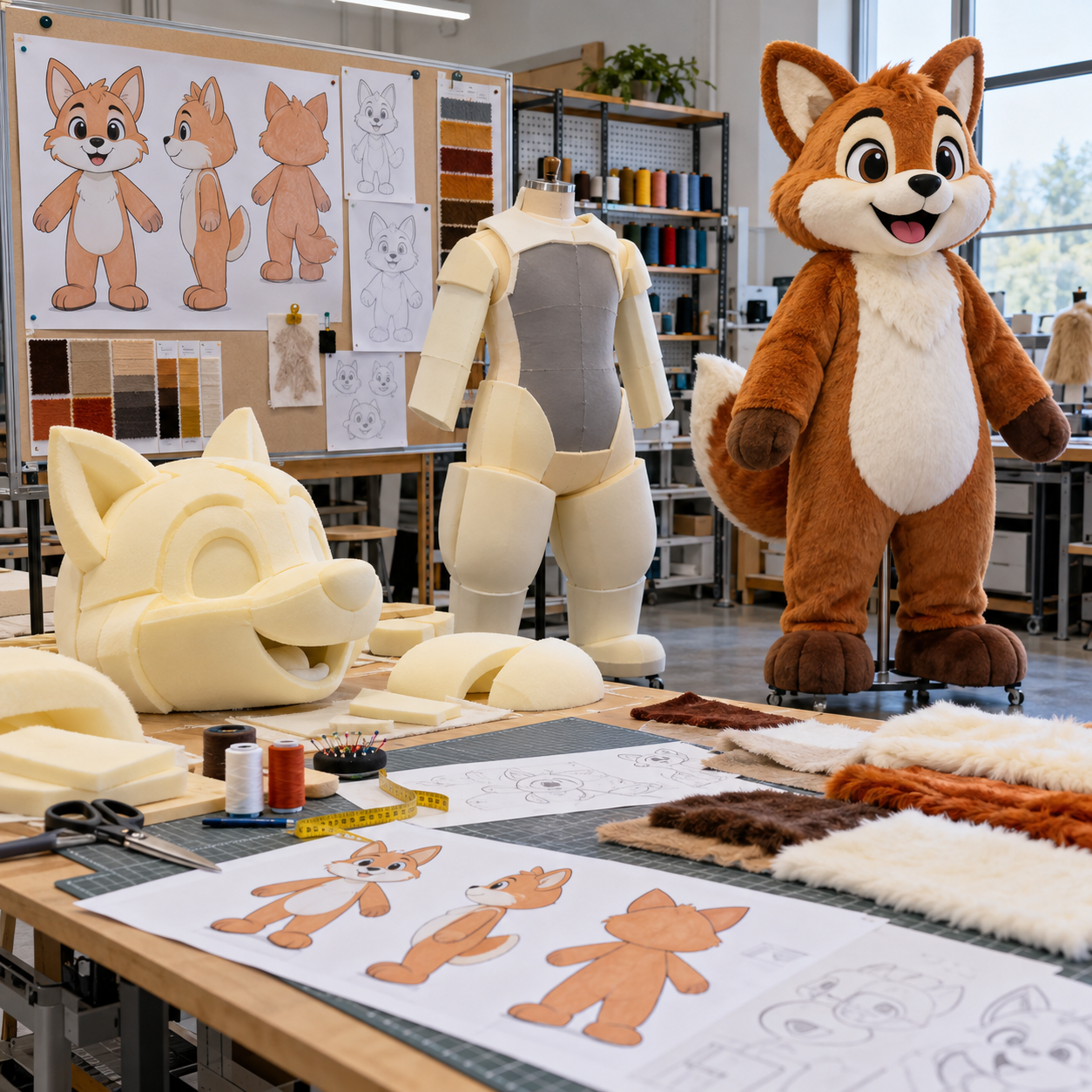
A mascot may begin as a logo, drawing, digital illustration, brand character, or even a simple sketch.
But turning that flat image into a real mascot costume is not as simple as copying the artwork.
A character that looks perfect on a screen still needs to work in three dimensions. It needs enough internal space for a performer, clear visibility, practical movement, balanced proportions, suitable materials, and a structure that can actually be manufactured.
This is where experience from a custom mascot factory becomes important.
At our factory, we work with customers to turn character ideas into practical, wearable mascot costumes while keeping the original personality and visual identity as much as possible.
Why a 2D Character Cannot Always Be Copied Exactly
Illustrations are not limited by real-world physics.
A cartoon character may have:
- A very large head
- Extremely thin arms
- Tiny legs
- Oversized eyes
- Unusual body proportions
- Floating accessories
- Very small feet
- Impossible joints
These features may look great in artwork but become difficult when a real person needs to wear the costume.
For example, an extremely narrow neck may not leave enough room for the performer.
Very small feet may not be stable enough for walking.
An oversized head may look accurate but become too heavy.
The goal is therefore not always to copy every detail exactly.
The goal is to preserve the character recognition while making the costume practical.
Identifying the Character’s Most Important Features
Before production starts, one of the first things we look at is what makes the character recognizable.
This may include:
- Head shape
- Eye size
- Facial expression
- Main colors
- Ears
- Hair
- Clothing
- Body proportions
- Tail
- Signature accessories
- Logo placement
Some details are much more important than others.
For example, changing a small decorative pattern may not affect recognition very much.
But changing the shape of the eyes, mouth, head, or ears could make the mascot look like a completely different character.
A good factory needs to know which details must be preserved and which details can be simplified.
Designing Around the Performer
The performer is always part of the design.
That is why we normally ask for the wearer’s:
- Height
- Weight
- Shoe size
- Body shape
- Intended use
- Movement requirements
A mascot is not simply a large piece of clothing.
The costume has to be designed around a real human body.
For example, the character’s knees may not be in the same position as the performer’s knees.
The character may have short legs, while the wearer has long legs.
In these situations, the costume needs visual adjustments so the outside still looks correct while the inside remains comfortable.
Adjusting Character Proportions for Real Production
One of the most common parts of mascot development is proportion adjustment.
Imagine a cartoon with:
- A huge head
- Short torso
- Tiny legs
If we reproduce those proportions exactly, the performer may not be able to walk safely.
Instead, we may slightly increase the leg length, adjust the body position, or reduce the head size.
These changes are usually subtle.
The goal is to keep the character looking familiar without making the costume difficult to wear.
Simplifying Details Without Losing the Character
Some character designs contain extremely detailed textures or small decorative elements.
A factory may need to simplify these elements during production.
For example:
A complicated raised surface may be replaced with sewn-on fabric shapes.
Very small 3D details may be represented using embroidery, printing, applique, or flat fabric decoration.
Fine digital shading may be converted into separate fabric color sections.
This is especially important for costumes that need to be durable and easy to maintain.
Too many small external parts can increase weight and make the costume easier to damage.
Choosing the Right Construction Method
Different characters need different production methods.
A soft animal mascot may use plush fabric and foam construction.
A human-style character may require a more structured face.
A product mascot may use EVA or shaped foam to maintain geometric forms.
An oversized object character may require lightweight internal support.
At our factory, the construction method is selected according to the design rather than forcing every mascot into the same production method.
This helps create a better balance between appearance, weight, comfort, and cost.
Turning Digital Colors Into Real Materials
Color matching is another important part of converting artwork into a physical costume.
A color displayed on a computer screen may look different when reproduced with fabric.
Plush, fleece, felt, stretch fabric, and printed materials all reflect light differently.
This means the exact digital color may not always exist as an available fabric.
In these situations, we select the closest suitable material and confirm the color with the customer before production.
For brand mascots, color consistency is especially important.
Eyes and Facial Expressions
The face is usually the most important part of the mascot.
Small changes to the eyes or mouth can completely change the personality.
A character can quickly appear:
- Friendly
- Serious
- Funny
- Energetic
- Cute
- Powerful
depending on the position of the eyes, eyebrows, mouth, and cheeks.
During the design stage, we pay close attention to these features because they strongly affect how the audience sees the character.
Making Large Features Lightweight
Many mascot characters have oversized heads, ears, horns, noses, hats, or accessories.
These features need to look large without becoming unnecessarily heavy.
Lightweight foam, EVA, fabric-covered structures, and hollow construction can help reduce weight.
A large feature does not always need to be solid.
In many cases, the best structure is one that looks substantial from the outside but uses as little internal material as necessary.
Accessories and Special Elements
Characters may also include:
- Hats
- Glasses
- Bags
- Weapons
- Wings
- Props
- Capes
- Backpacks
- Product packaging
- Oversized objects
These parts need to be considered early in the design.
An accessory that looks small in artwork may become quite large once scaled to mascot size.
For this reason, attachment points, weight, balance, and removability should all be considered.
Whenever possible, we prefer lightweight and removable accessories because they make transportation and maintenance easier.
Free Design Support Before Production
For many customers, the original idea may only be a logo, photo, rough sketch, or reference image.
That is enough to start.
As a direct custom mascot factory, we can help develop the idea into a more practical mascot concept before production.
This allows customers to review:
- Overall appearance
- Color
- Proportions
- Clothing
- Accessories
- Character details
before the costume is made.
Making adjustments during the design stage saves time and helps reduce misunderstandings later.
Direct Communication With the Factory
Working directly with the factory also makes design changes easier.
When a customer requests changes to the eyes, head shape, color, clothing, logo, or accessories, those requirements can be discussed directly with the design and production team.
There are fewer communication layers.
This can be especially useful for unusual custom projects that require special structures or non-standard designs.
Supporting Both Simple and Complex Projects
Not every mascot needs to be highly complicated.
Sometimes a simple structure is actually better.
A lightweight mascot with fewer unnecessary details may be:
- Easier to wear
- Easier to transport
- Easier to repair
- More comfortable
- More affordable
For other projects, customers may require more complex sculpting, accessories, internal support, or special features.
Our factory can work with different levels of customization depending on the customer’s budget and requirements.
Prototypes, Adjustments, and Factory Feedback
For unusual mascot designs, production experience is particularly valuable.
Some ideas may look possible in an illustration but need adjustments once the factory evaluates them.
A responsible manufacturer should be willing to explain when a feature needs to be simplified.
This is not about reducing quality.
It is about making sure the final mascot is realistic, wearable, and practical.
Sometimes the best version of a mascot is not the most complicated version.
It is the version that looks right and actually works.
Custom Mascots for Different Uses
The same character may need a different structure depending on where it will be used.
A sports mascot may need more movement.
A brand mascot may focus more on visual accuracy.
A school mascot may need durability for repeated use.
A promotional mascot may need quick dressing and easy transportation.
An event mascot may need lightweight construction for longer performances.
Understanding the final use helps the factory make better design decisions.
From Idea to Finished Costume
The journey from artwork to mascot costume usually involves several decisions:
- Understanding the character
- Identifying key visual features
- Reviewing performer size
- Adjusting proportions
- Choosing suitable materials
- Simplifying impractical details
- Confirming colors and accessories
- Building the costume
- Testing fit and appearance
- Making final adjustments
Every stage helps bring the original character closer to a real, wearable result.
Conclusion
Turning a 2D character into a mascot costume is a combination of design, engineering, craftsmanship, and practical experience.
The best result is not simply a costume that looks similar to the original artwork.
It should also be comfortable, wearable, durable, balanced, and suitable for real performances.
As a direct custom mascot factory, we work with customers from the first idea through design, production, quality inspection, and shipping.
Whether you already have a finished character design or just a simple idea, the first step is usually the same:
Send us your image, sketch, logo, or concept, and we can help turn it into a real mascot costume.