
ALL POSTS
How Reinforcement and Stress Points Affect Mascot Costume Durability
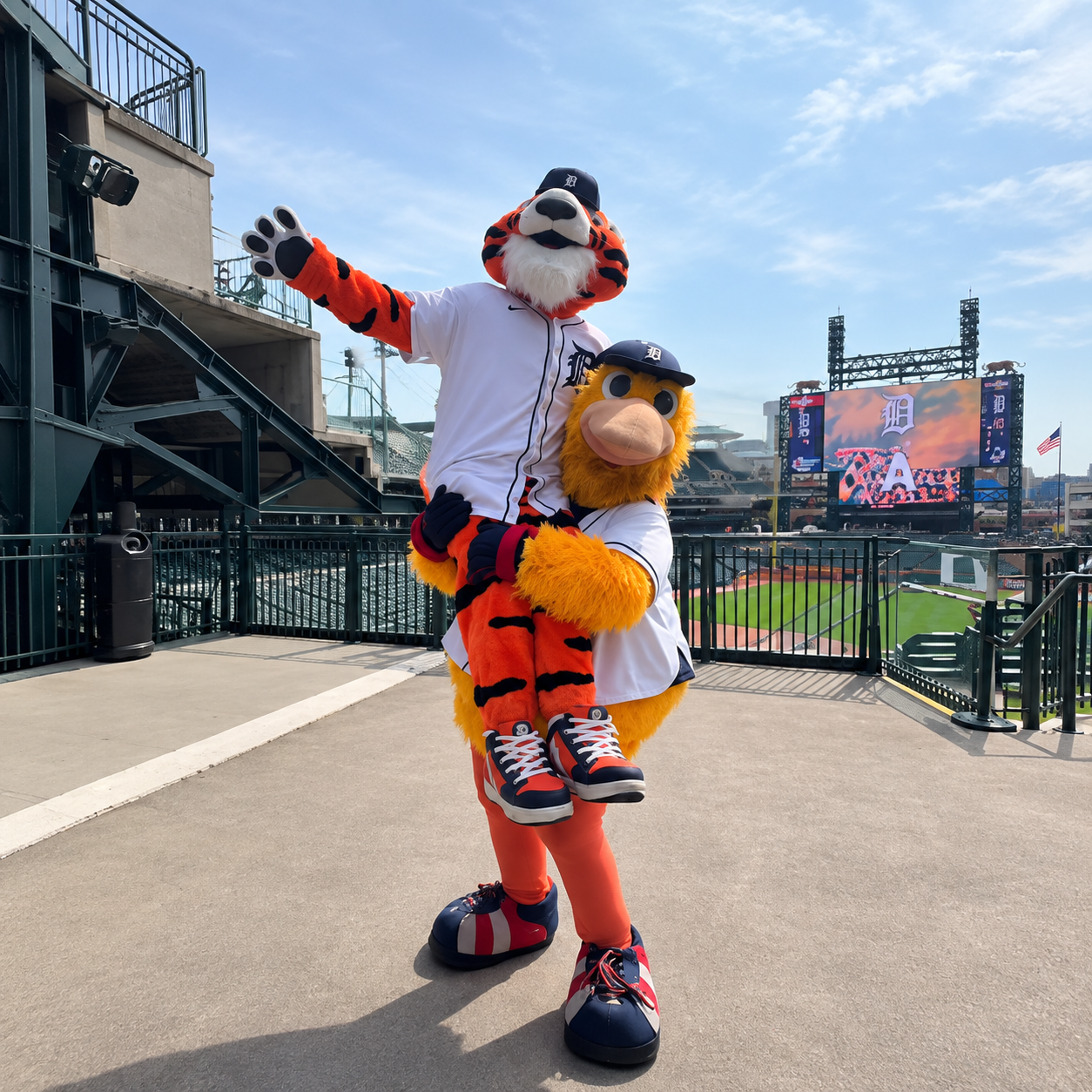
A mascot costume may look soft and lightweight from the outside, but during real performances, many parts of the costume are repeatedly stretched, compressed, bent, pulled, and rubbed.
Walking, dancing, waving, sitting, turning, and interacting with people all create mechanical stress on different areas of the costume.
For this reason, durability does not depend only on the quality of the fabric or foam. It also depends on how the costume is reinforced, where the main stress points are located, and how different materials are connected together.
Understanding these details is important when designing a mascot costume for frequent or long-term use.
1. What Are Stress Points in a Mascot Costume?
Stress points are areas that receive repeated force during movement.
These areas usually include:
- shoulder connections
- neck openings
- arm joints
- underarm areas
- waist connections
- leg openings
- hand attachments
- shoe connections
- zipper areas
- internal support points
When a performer moves, these areas are repeatedly stretched or compressed.
For example, every time the performer raises an arm, the fabric around the shoulder and underarm area experiences tension.
If these areas are not reinforced correctly, stitching may loosen, fabric may tear, or foam structures may gradually deform.
2. Shoulder Areas Carry More Stress Than They Appear
The shoulders are one of the most important structural areas in many mascot costumes.
The head, arms, and upper body often interact around this area.
If the costume has a large mascot head, part of its weight may also affect the shoulder and upper-body structure.
During movement, the shoulder area must allow enough flexibility while still maintaining the shape of the costume.
Too much rigidity can restrict movement.
Too little support can cause sagging, stretching, or uneven deformation.
A good design balances flexibility and reinforcement.
3. Arm Joints Need Flexible Reinforcement
Mascot performers frequently wave, point, hug, dance, and interact with audiences.
Because of this, the arm joints experience continuous motion.
The connection between the arm and body should not simply rely on one layer of fabric.
Depending on the design, additional fabric layers, elastic materials, reinforcement stitching, or internal support structures may be added.
The goal is not to make the joint completely rigid.
Instead, the reinforcement should allow movement while reducing stress on the main seam.
This is especially important for mascots used at sports events, schools, promotional activities, and long performances.
4. Seams Are More Important Than They Look
A seam is not just where two pieces of fabric are connected.
In many mascot costumes, seams also control shape and distribute tension.
Poor seam placement can create concentrated stress.
When tension is focused on a small area, the risk of tearing increases.
A better pattern distributes stress across a larger surface.
This is why experienced costume construction often considers not only appearance, but also the direction of movement.
The position of seams can affect:
- flexibility
- comfort
- durability
- appearance
- repair difficulty
Good seam design is part of structural engineering, not just sewing.
5. Zippers Are Common Stress Areas
Zippers are often used on the back, side, or lower part of mascot costumes.
They make it easier for performers to enter and exit the costume.
However, zippers can also become stress points.
If the surrounding fabric is too thin or unsupported, repeated opening, closing, pulling, and stretching may damage the area around the zipper.
Reinforcement fabric or stronger stitching is often used around zipper openings.
The zipper should also be positioned where body movement does not constantly pull against it.
A poorly positioned zipper may work well when the costume is standing still but experience unnecessary stress during performance.
6. Foam Structures Also Need Reinforcement
Many mascot costumes use high-resilience foam, EVA foam, or sculpting foam to create volume and shape.
Foam is lightweight, but it can still become damaged after repeated bending or compression.
Large body shapes may need internal reinforcement to help maintain their form.
For example, the edges of foam sections may be strengthened where different pieces are joined.
Areas that are repeatedly pressed by the performer may also need extra support.
The purpose is not to make the costume harder.
It is to prevent the structure from collapsing or permanently changing shape after repeated use.
7. Head Support Points Are Critical
The mascot head is often one of the most complex parts of the costume.
Its outer shape may be made from foam or lightweight structural materials, while the inside includes support points that help the performer control the head.
These support points must handle repeated pressure.
If the internal support is too weak, the head may move excessively or become unstable.
If it is too hard or poorly positioned, it may create discomfort.
A well-designed head support system distributes pressure across several contact areas rather than concentrating it in one place.
This improves both comfort and structural durability.
8. Footwear Experiences Constant Impact
Mascot shoes may look simple, but they experience repeated impact from walking, turning, dancing, and jumping.
The bottom structure must support the performer while also protecting the external shape.
Areas around the sole, toe, heel, and ankle often require reinforcement.
If the internal shoe structure is too soft, it may deform quickly.
If it is too rigid, walking can become uncomfortable.
Durability depends on finding the correct balance between structure, cushioning, flexibility, and weight.
9. Different Materials Create Different Stress Behavior
A mascot costume often combines several materials.
For example:
- foam
- EVA
- plush fabric
- mesh
- lining
- elastic
- plastic components
- hook-and-loop fasteners
- straps
These materials do not stretch or compress in the same way.
When two materials with very different properties are connected, the connection area can become a stress point.
For example, flexible fabric attached directly to a rigid plastic component may experience concentrated pulling.
Proper construction often includes transition layers, reinforced stitching, or flexible connectors.
This helps different materials move together more naturally.
10. Reinforcement Should Not Make the Costume Too Heavy
It may seem logical that more reinforcement always means greater durability.
However, excessive reinforcement can create new problems.
Too many heavy materials can increase the total weight of the costume.
This may make the performer tired more quickly and reduce movement range.
Overly rigid structures may also transfer stress to another area instead of solving the problem.
Good reinforcement is selective.
It strengthens the areas that actually need support while keeping the overall costume lightweight and flexible.
11. Performance Style Affects Reinforcement Requirements
Different mascots require different levels of reinforcement.
A mascot used mainly for short photo sessions may experience relatively low stress.
A mascot used for sports events, dancing, parades, or long promotional activities may experience much greater mechanical stress.
The design should therefore consider how the mascot will actually be used.
Important questions include:
- How long will each performance last?
- Will the performer dance or jump?
- Will the mascot interact closely with people?
- Will it be used indoors or outdoors?
- How frequently will the costume be worn?
- Will different performers use the same costume?
These factors affect where reinforcement is needed.
12. Durability Begins During the Design Stage
Many durability problems cannot be solved simply by adding stronger materials later.
They begin with the original design.
A well-designed mascot costume considers:
- movement direction
- stress distribution
- seam placement
- reinforcement points
- material compatibility
- internal support
- performer comfort
- maintenance requirements
When these factors are considered together, the costume can maintain its shape and performance quality for longer.
Conclusion
The durability of a mascot costume is not determined by one material or one sewing technique.
It is the result of how the entire structure handles movement and repeated stress.
Shoulders, joints, seams, zippers, foam structures, head supports, and footwear all experience different forces during performance.
By identifying these stress points and reinforcing them appropriately, a mascot costume can remain flexible, comfortable, and structurally stable even after repeated use.
For professional mascot construction, durability is not about making every part heavier or stronger.
It is about strengthening the right areas while preserving movement, comfort, and visual appearance.