
A mascot costume may look simple from the outside, but wearing one is very different from wearing ordinary clothing. Inside the costume, the performer has to carry additional weight, see through limited openings, move inside a larger body shape, and deal with heat generated during activity.
Because of this, comfort is not determined by one material or one feature alone. It is the result of several structural factors working together.
A well-designed mascot costume should not only reproduce the appearance of a character. It should also allow the performer to move, see, breathe and maintain balance as naturally as possible.
This article looks at the main factors that influence the wearing experience of a mascot costume.
1. Weight Distribution Matters More Than Total Weight
When people talk about mascot costume comfort, weight is often the first thing mentioned.
However, total weight is only part of the issue.
A costume can be relatively lightweight and still feel uncomfortable if most of the weight is concentrated in the head or shoulders. On the other hand, a slightly heavier costume may feel easier to wear if its weight is distributed evenly.
For example, a large mascot head places continuous pressure on the neck if the internal support structure is not properly designed.
Good weight distribution usually depends on several factors:
- the size of the mascot head
- the position of the internal head support
- the balance between the front and back of the head
- the weight of decorative parts such as horns, ears or hair
- the structure of the body section
- how the costume rests on the shoulders or torso
The goal is not simply to make every component as light as possible.
The real goal is to prevent one area of the performer’s body from carrying too much load for a long period of time.
2. The Internal Head Support System Is Extremely Important
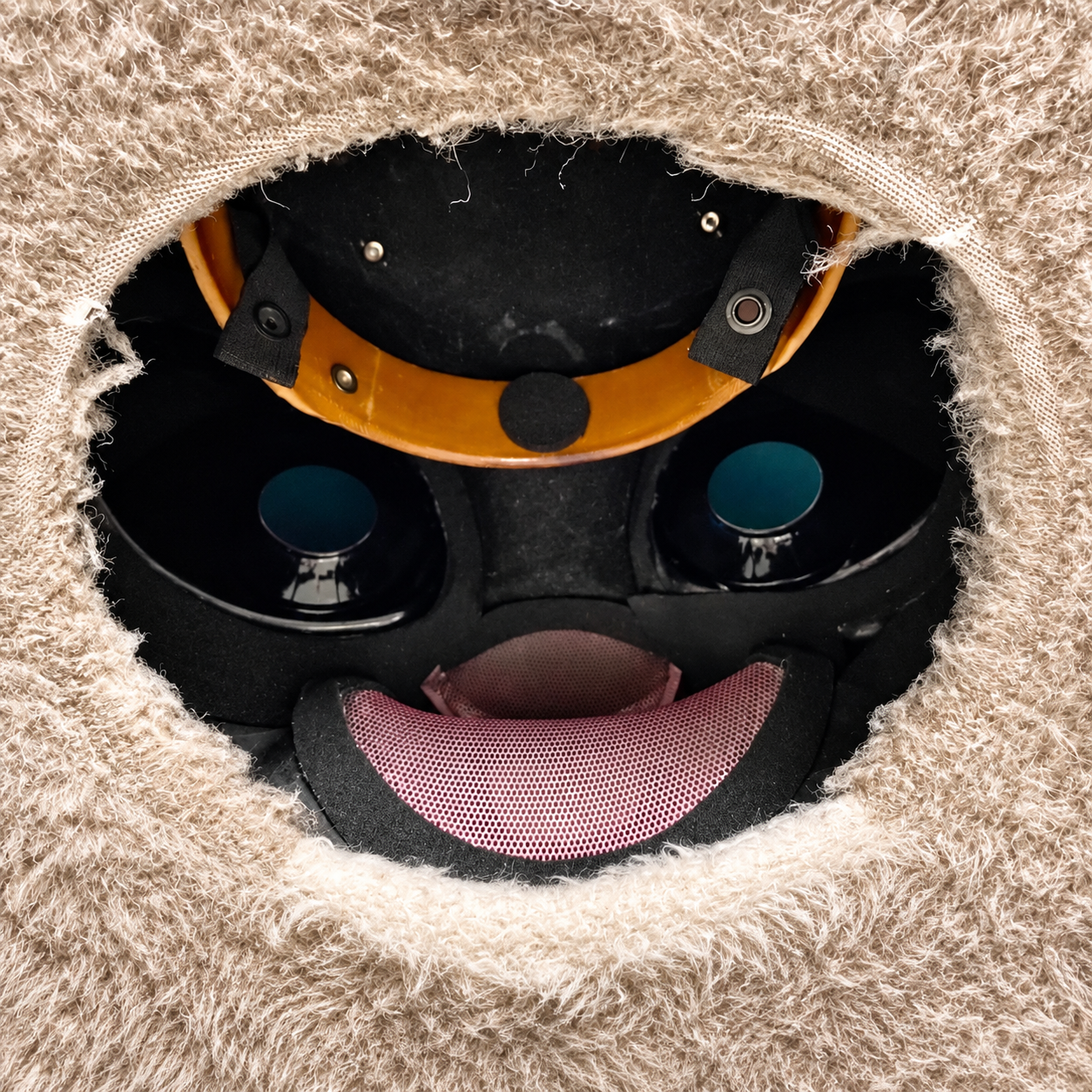
The inside of a mascot head is rarely completely empty.
There is usually some form of internal support that helps position the mascot head correctly on the performer.
Depending on the design, this may include:
- foam padding
- EVA support structures
- helmet-style head supports
- adjustable straps
- chin supports
- internal head rings
- shoulder-supported systems
The purpose of the support system is to prevent the mascot head from moving independently when the performer turns, walks or dances.
If the head is too loose, it may rotate or shift during movement.
If it is too tight, it may create pressure points around the forehead, chin or sides of the head.
A properly fitted internal support system keeps the mascot head stable while still allowing enough space for airflow and comfortable movement.
3. Visibility Determines How Confidently the Performer Can Move
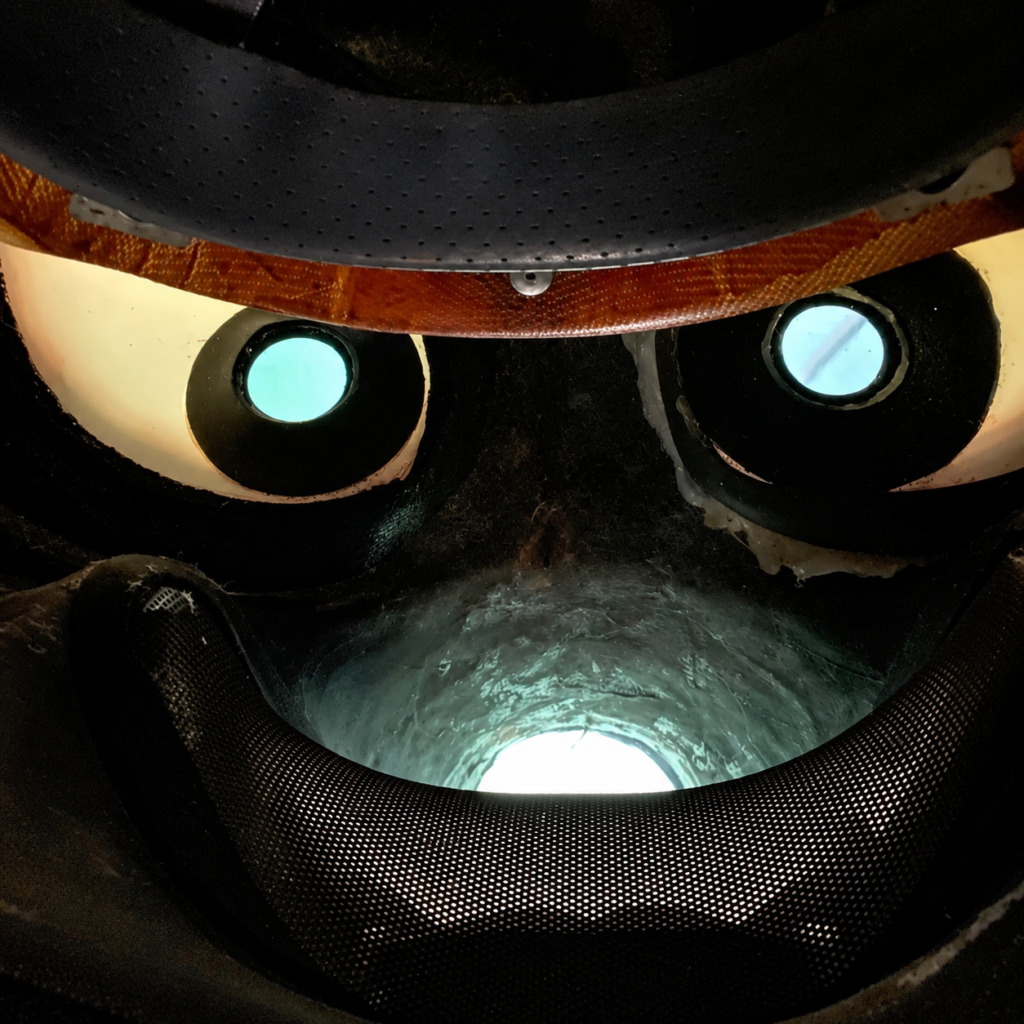
A mascot performer usually cannot see directly through the character’s eyes in the same way a person sees through a normal mask.
The viewing area may be hidden in:
- the mascot’s eyes
- the mouth
- the nose
- dark mesh sections
- openings between facial features
This means visibility has to be considered during the structural design stage.
There are two main aspects of mascot visibility.
Forward Visibility
The performer needs a clear enough viewing area to see people, obstacles and the direction of travel.
Peripheral Visibility
Side visibility is especially important during events because performers are often surrounded by children, staff members, furniture or stage equipment.
A costume with a very narrow field of view may look accurate from the outside but become difficult to operate safely in a crowded environment.
This is why the location and size of the viewing mesh must be balanced with the visual appearance of the character.
4. Ventilation Directly Affects Wearing Time
Mascot costumes naturally retain heat.
The performer produces body heat while walking, waving, dancing or interacting with people, while the foam, fabric and internal structures reduce normal airflow.
The head is usually one of the warmest areas.
Ventilation can be improved in several ways.
For example:
- breathable mesh can be incorporated into hidden areas
- ventilation holes can be positioned inside the head
- internal spaces can be created between the performer and the outer shell
- small electric fans may be installed inside some mascot heads
- lightweight fabrics can be used in selected areas
The effectiveness of ventilation depends strongly on the shape of the mascot.
A large round head often has more internal air volume than a compact human-shaped mascot head, which can affect airflow differently.
Ventilation therefore needs to be considered together with the character structure rather than treated as a separate accessory.
5. Internal Space Affects Mobility
A mascot body is usually larger than the performer’s actual body.
This creates an internal gap between the performer and the costume shell.
If the gap is too small, movement may become restricted.
If the gap is too large, the costume may swing excessively when the performer moves.
The ideal internal space depends on the character design.
Large round characters may require an internal framework or foam structure to maintain their shape.
Slimmer characters may rely more on fabric and padding.
The arm openings are particularly important.
The performer should be able to:
- raise the arms
- wave
- clap
- hold simple poses
- interact with people
without the costume pulling strongly across the shoulders or chest.
6. Joint Positioning Influences Natural Movement
Mascot proportions are often very different from human proportions.
A character may have:
- extremely short legs
- oversized feet
- very long arms
- a large stomach
- a head wider than the shoulders
The challenge is to visually reproduce those proportions while still allowing a human performer to move inside them.
This requires careful positioning of the costume’s joints.
For example, the visual elbow of the mascot may not be exactly where the performer’s elbow is located.
The same applies to knees and shoulders.
Designers often use padding, fabric shapes and internal structures to create the illusion of different body proportions without completely restricting the performer’s natural joints.
This is one reason mascot costume construction is partly a structural design problem rather than simply a sewing process.
7. Footwear Has a Major Effect on Stability
Mascot feet are often much larger than ordinary shoes.
Oversized feet are useful for creating cartoon proportions, but they can also affect balance and walking speed.
Inside the mascot foot, the performer normally needs a secure connection between their own shoe or foot and the outer mascot shoe.
The internal structure may use:
- foam
- straps
- removable footwear
- anti-slip materials
- internal shoe bases
The bottom surface is also important.
For indoor performances, smooth but non-slip soles are usually preferred.
Outdoor environments may require more durable sole materials.
A mascot foot should be large enough to create the correct visual proportion but not so large that the performer constantly steps on the opposite foot.
8. Fabric Choice Changes Heat, Flexibility and Movement
The outer fabric does more than define the visual appearance of the mascot.
Different fabrics behave differently during movement.
Short-pile fabrics usually create a cleaner surface and may be easier to control around moving joints.
Long-pile fur can create a softer appearance but may increase heat retention.
Stretch fabrics can adapt well to narrow body sections and moving joints.
Some decorative fabrics may look attractive but provide limited breathability.
Therefore, fabric selection involves several considerations at the same time:
- appearance
- weight
- flexibility
- durability
- breathability
- cleaning requirements
The material that looks most accurate is not always the material that performs best in every part of the costume.
It is common for several materials to be combined in one mascot.
9. Temperature and Activity Level Change the Wearing Experience
The same mascot costume can feel very different depending on where and how it is used.
For example, wearing a mascot indoors for a short photo session is very different from performing outdoors for an hour.
Several environmental factors affect comfort:
- air temperature
- humidity
- sunlight
- performance duration
- movement intensity
- indoor ventilation
High-energy activities such as dancing generate significantly more heat than standing for photos.
For this reason, performers often work in shorter sessions and take regular breaks.
Comfort is therefore partly a costume-design issue and partly a performance-management issue.
10. Performer Size Should Match the Costume Structure
Although many mascot costumes can accommodate a range of performer sizes, the performer’s height still affects how the costume functions.
If the performer is much shorter than the intended size, the costume may:
- sit too low
- create poor visibility
- cause the arms to misalign
- make the feet difficult to control
If the performer is too tall, the costume may become tight around the shoulders or legs.
This is why height is usually one of the most important measurements when planning a mascot costume.
For some designs, additional measurements may also be useful, particularly when the costume has a narrow or highly structured body.
Comfort Is a Structural Design Problem
Mascot costume comfort does not come from a single feature.
It comes from the relationship between:
- weight
- balance
- ventilation
- visibility
- internal support
- body space
- joint position
- footwear
- materials
- performer size
A change in one area can affect several others.
For example, making a mascot head larger may improve visual accuracy but increase weight. Adding more foam may improve shape but reduce ventilation. Enlarging the viewing mesh may improve visibility but change the character’s appearance.
The best mascot costume structures therefore balance appearance with practical wearing requirements.
Understanding these details also explains why two mascot costumes that look almost identical from the outside can feel completely different when worn.