A custom mascot costume may look fun and simple from the outside, but creating one requires careful design, material selection, skilled craftsmanship, and multiple quality checks.
Unlike ready-made costumes, a custom mascot is developed specifically around a customer’s character, logo, brand colors, performer size, and intended use.
From the first sketch to the finished costume, every step plays an important role in turning a two-dimensional idea into a real, wearable mascot character.
In this guide, we’ll walk through the typical custom mascot costume production process and explain what goes into making a professional mascot.
Step 1: Send Your Mascot Idea
Every custom mascot project begins with an idea.
Customers may provide:
- A finished character design
- A company logo
- A hand-drawn sketch
- A product image
- A school or sports symbol
- Reference photos
- A simple description of the character
You do not necessarily need a complete professional design before contacting a mascot supplier.
Even a basic concept can be developed into a complete mascot design with the help of an experienced design team.
The more information you provide, the easier it is to understand the appearance, style, proportions, colors, and purpose of the mascot.
Step 2: Create and Confirm the Design
Once the idea has been received, the next step is to prepare or review the mascot design.
Important details may include:
- Overall character shape
- Head proportions
- Facial expression
- Brand colors
- Logo placement
- Clothing
- Accessories
- Hands and feet
- Performer size
If necessary, adjustments can be made before production begins.
This stage is especially important because the final costume should not only look similar to the original design, but also work as a real wearable costume.
A good mascot design must balance appearance, structure, comfort, and movement.
Step 3: Select the Right Materials
Different mascot characters require different materials and internal structures.
Professional mascot production commonly uses several types of materials.
Soft Plush Fabric
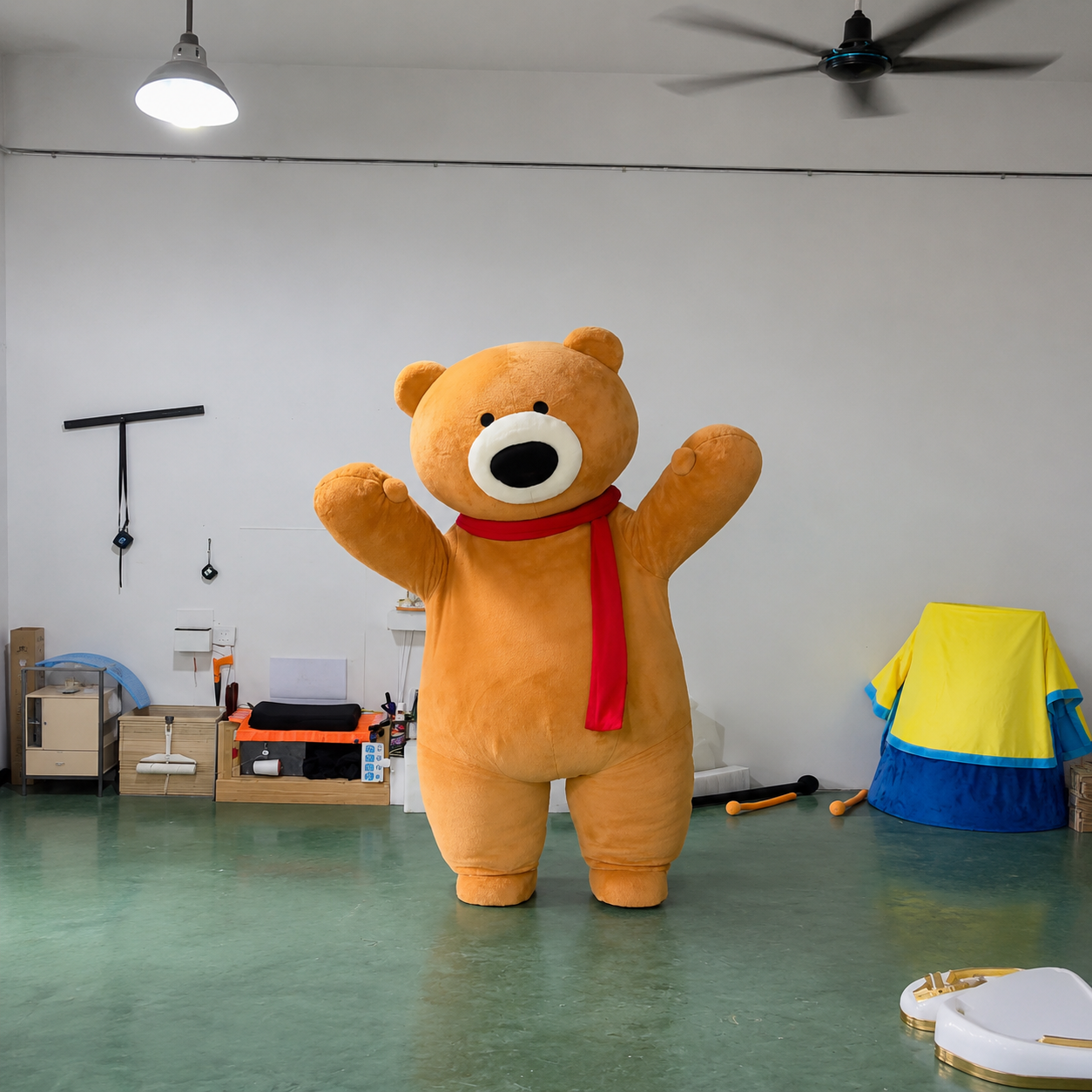
Plush fabric is widely used for animal mascots and soft character designs.
It provides a friendly, comfortable appearance and is available in many colors, textures, and fur lengths.
It is especially suitable for characters such as:
- Bears
- Tigers
- Lions
- Rabbits
- Cats
- Dogs
- Birds
High-Elastic Foam
High-elastic foam is lightweight, flexible, and easy to shape.
It is commonly used for:
- Large body shapes
- Rounded characters
- Soft structures
- Oversized product mascots
Because the material is lightweight, it can help improve performer comfort and mobility.
EVA Structure
EVA is often used for mascot heads and areas that require stronger contours or structural support.
Compared with softer foam, EVA can hold a defined shape more effectively while still remaining relatively lightweight.
It is especially useful for:
- Character heads
- Animal heads
- Structured facial shapes
- Detailed three-dimensional designs
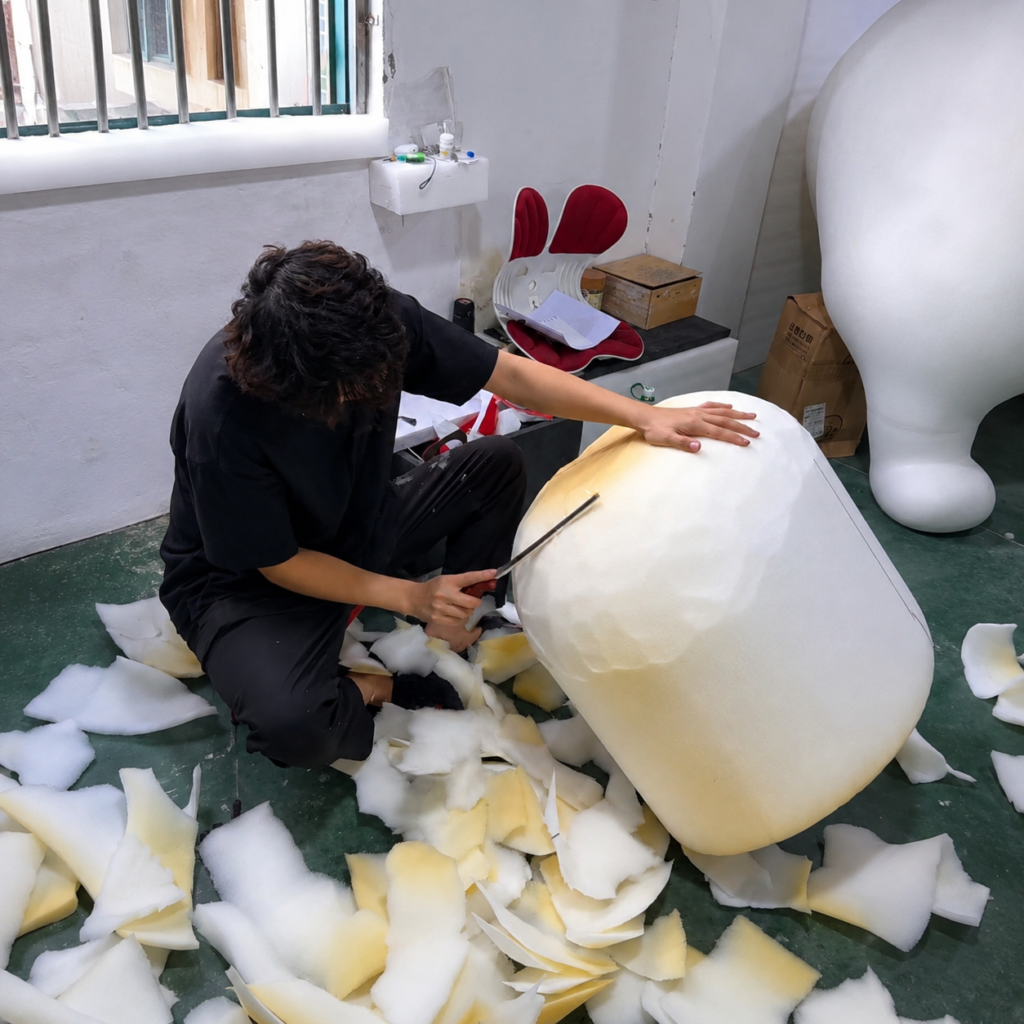
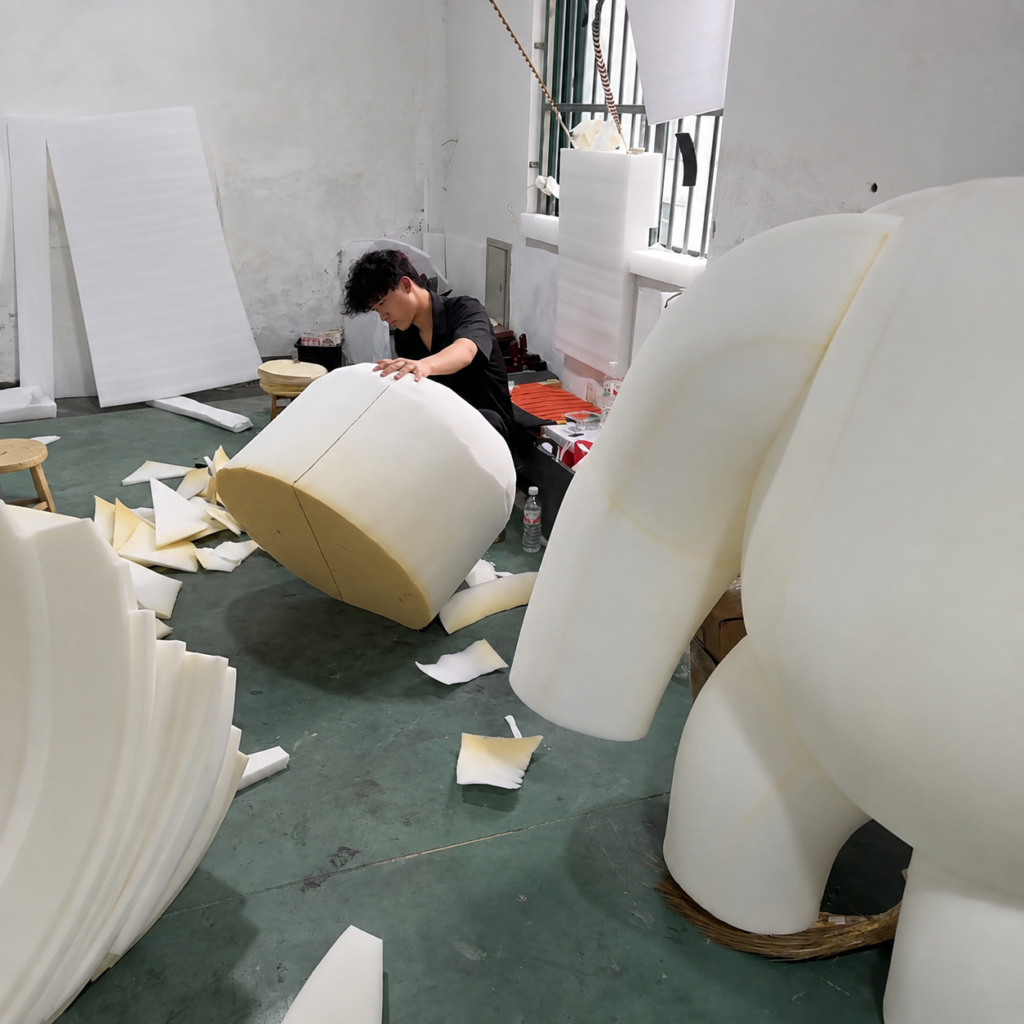
Foam Carving
For more detailed characters, foam carving can be used to create complex three-dimensional forms.
Skilled craftsmen may carve:
- Eyes
- Noses
- Mouths
- Head shapes
- Facial contours
- Product-shaped characters
This step helps transform a flat design into a recognizable three-dimensional mascot.
Step 4: Build the Mascot Structure
After the materials are selected, craftsmen begin forming the internal structure of the costume.
The head is usually one of the most important parts because it determines the character’s overall appearance.
Depending on the design, the structure may include:
- Foam shaping
- EVA construction
- Internal support
- Eye openings
- Ventilation areas
- Head supports
The body, hands, feet, clothing, and accessories are also produced according to the confirmed design.
Because many parts of a mascot costume require detailed shaping and assembly, much of the production process is completed by hand.
Step 5: Sewing and Handcrafting
Once the basic structure is completed, fabric and decorative materials are added.
Experienced craftsmen cut, sew, attach, and finish the costume according to the character design.
This stage may include:
- Sewing plush fabric
- Adding clothing
- Installing zippers
- Attaching logos
- Adding hair or fur
- Creating gloves
- Making mascot shoes
- Installing accessories
Professional craftsmanship is especially important around the face, seams, hands, and other visible areas.
Small details can make a major difference in the final appearance.
Step 6: Add Ventilation and Comfort Features
A mascot may be worn for long periods during events, games, exhibitions, or promotional activities.
For this reason, comfort should be considered during production.
Depending on the design, the costume may include:
- Built-in cooling fans
- Ventilation openings
- Internal mesh
- Lightweight structures
- Adjustable straps
- Comfortable head supports
- Improved visibility
A built-in cooling fan can help move air inside the mascot head and improve comfort during longer performances.
The supplier may also ask for the performer’s height and other body measurements to ensure a better fit.
Step 7: Quality Inspection
Before the mascot costume is completed, it should go through a detailed quality inspection.
The inspection may include checking:
- Overall appearance
- Color accuracy
- Character proportions
- Stitching quality
- Structural stability
- Visibility
- Ventilation
- Movement
- Logo placement
- Accessories
- Size and fit
The goal is to make sure that the finished mascot matches the approved design and is suitable for real-world use.
Step 8: Photo and Video Approval
Before shipping, customers may receive photos or videos of the completed mascot.
This gives the customer an opportunity to review the finished product before shipment.
The review may include:
- Front view
- Side view
- Back view
- Close-up details
- Performer testing
- Walking or movement test
If everything is confirmed, the mascot can move to the final packing stage.
Step 9: Packing and Worldwide Shipping
After approval, the mascot costume is carefully packed to help protect it during transportation.
Depending on the design and destination, the package may include:
- Mascot head
- Body costume
- Gloves
- Shoes
- Accessories
- Storage or carrying bag
- Cooling fan components
The completed mascot can then be shipped to customers worldwide.
International customers can complete the entire custom process remotely, from design approval to final delivery.
How Long Does It Take to Make a Custom Mascot?
Production time depends on the complexity of the character.
A simple design may require less production time, while a highly detailed mascot with special structures, accessories, or complex craftsmanship may take longer.
The overall timeline generally includes:
Design Confirmation → Material Preparation → Production → Quality Inspection → Customer Approval → Packing → Shipping
If the mascot is needed for a specific event, customers should place the order early enough to allow time for both production and international shipping.
Can You Order Only One Custom Mascot?
Yes.
Custom mascot production does not always require a large order.
For many projects, MOQ 1 Piece is available.
This makes custom mascot costumes suitable for:
- Schools
- Sports teams
- Brands
- Small businesses
- Events
- Trade shows
- Grand openings
- Promotional campaigns
Even if you only need one mascot, it can still be customized according to your character and brand requirements.
Why Handmade Craftsmanship Matters
Although modern equipment can assist with parts of mascot production, skilled handwork remains extremely important.
Mascot characters often include unusual shapes, facial expressions, fabrics, logos, and accessories that cannot be produced effectively through a completely standardized process.
Handmade production allows craftsmen to carefully adjust:
- Shape
- Proportions
- Stitching
- Surface details
- Character expression
- Overall finish
This is one of the reasons high-quality custom mascots can look significantly more realistic and professional than mass-produced costumes.
From Idea to Real Character
Creating a custom mascot costume is much more than simply sewing fabric together.
It combines character design, material selection, structural engineering, foam shaping, sewing, handcrafted detailing, quality inspection, and performer comfort.
When all of these elements are carefully considered, a simple sketch or logo can become a memorable character that represents a brand, school, sports team, or organization in the real world.
MascotHub provides custom mascot costume solutions with design support, professional craftsmanship, OEM/ODM customization, MOQ 1 piece, quality inspection, and worldwide shipping.
Have a mascot idea?
Send us your logo, sketch, character design, or reference image to discuss your project.
Email: Ryan@lumeonmascot.com
WhatsApp: +86 17325715886